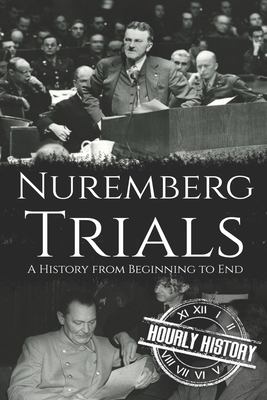
Nuremberg trials : a history from beginning to end
print
Nuremberg trials : a history from beginning to end
Copies
1 Total copies, 1 Copies are in, 0 Copies are out.
In 1933, the National Socialist German Workers’ Party, triumphant after the July 1932 elections, was the largest political party in Germany. The Nazis quickly banned all other political parties and, under the leadership of Adolf Hitler, proceeded to implement the policies which aroused the anti-Semitic sentiment of the German people. By 1933, the first concentration camp in Dachau was already in operation, punishing Jews, intellectuals, the mentally and physically handicapped, homosexuals, and Romani because, in Nazi ideology, they were inferior and unfit to live in the Third Reich. In September 1935, the Nazis passed the Nuremberg Laws, which consisted of the Reich Citizenship Law and the Law for the Protection of German Blood and German Honor. These laws established the legal foundation upon which the systematic persecution and extermination of Jews and non-Aryans became the law of the land. Between 1933 and 1945, the Nazis established more than 42,000 camps and ghettoes to implement this policy.
  • Share It:
IDTitleUnavailableFromToCopies
zoom in
zoom out
Title
Your Rating
MLA
APA
Chicago
Picture Scale
0 / 0